Businesses these days collect or maintain personal information in a variety of cloud-based platforms, applications, and on-premises systems, making the task of tracking it difficult. In India, the Digital Personal Data Protection (DPDP) Act provides certain rules governing how organisations can process digital personal data and gives individuals rights over their personal data. The Act regulates the processing of digital personal data and requires organisations to handle such data responsibly and protect it from misuse or unauthorised access. But before any business can protect personal information, it first needs to know what it is holding, where it lives, and how it is being used. That’s the baseline from which PII discovery becomes such an essential element of responsible data management.
What is Personally Identifiable Information (PII)?
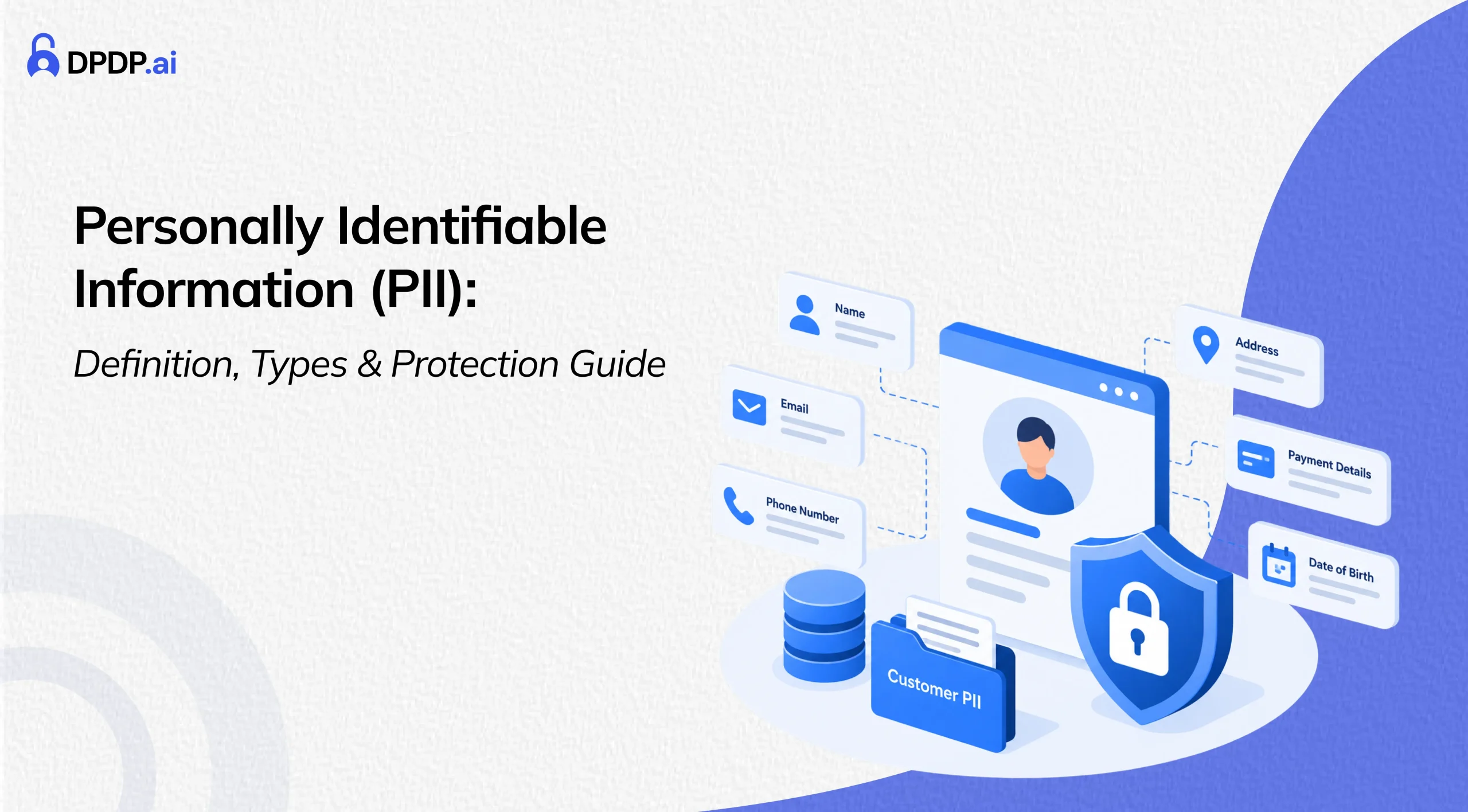
PII, or Personally Identifiable Information, is any data that can identify a specific individual either by itself or when combined with other information. It includes names, email addresses, phone numbers, location, date of birth, job title, and other details that can be used alone or with other information to identify a person.
This is why organisations need to look beyond the obvious categories when handling personal data. As businesses store and manage personal information across different systems and platforms, it becomes harder to know what PII they hold, where it is stored, and how it is being used. Having a clear view of this information helps organisations protect it and meet applicable privacy requirements.
Why does PII matter?
It protects personal data: Safeguarding PII helps prevent identity theft, fraudulent accounts, and the broader misuse of personal information.
It builds trust: Customers are far more willing to engage with a business when they believe their information is being handled responsibly.
It strengthens privacy practices: Clear policies around personal data give organisations better control over who can access information and how it’s used.
It supports compliance: Privacy laws, including India’s DPDP Act, 2023, set rules for how organisations should handle personal data. The Act requires organisations to have a lawful purpose for processing personal data and, where consent is the basis for processing, to obtain consent that is free, specific, informed and unambiguous.
It gives individuals more control: Under the DPDP Act, individuals, referred to as Data Principals, have rights relating to their personal data. These include the right to access information about their personal data, request correction or erasure in applicable circumstances, and raise grievances.
It limits financial and operational fallout. Data privacy incidents can be costly. A breach can lead to investigation costs, business disruption, loss of customers, and regulatory fines.
It reinforces cybersecurity. Knowing exactly where PII sits helps security teams decide where encryption, access controls, and other protective measures matter most.
How to protect PII?
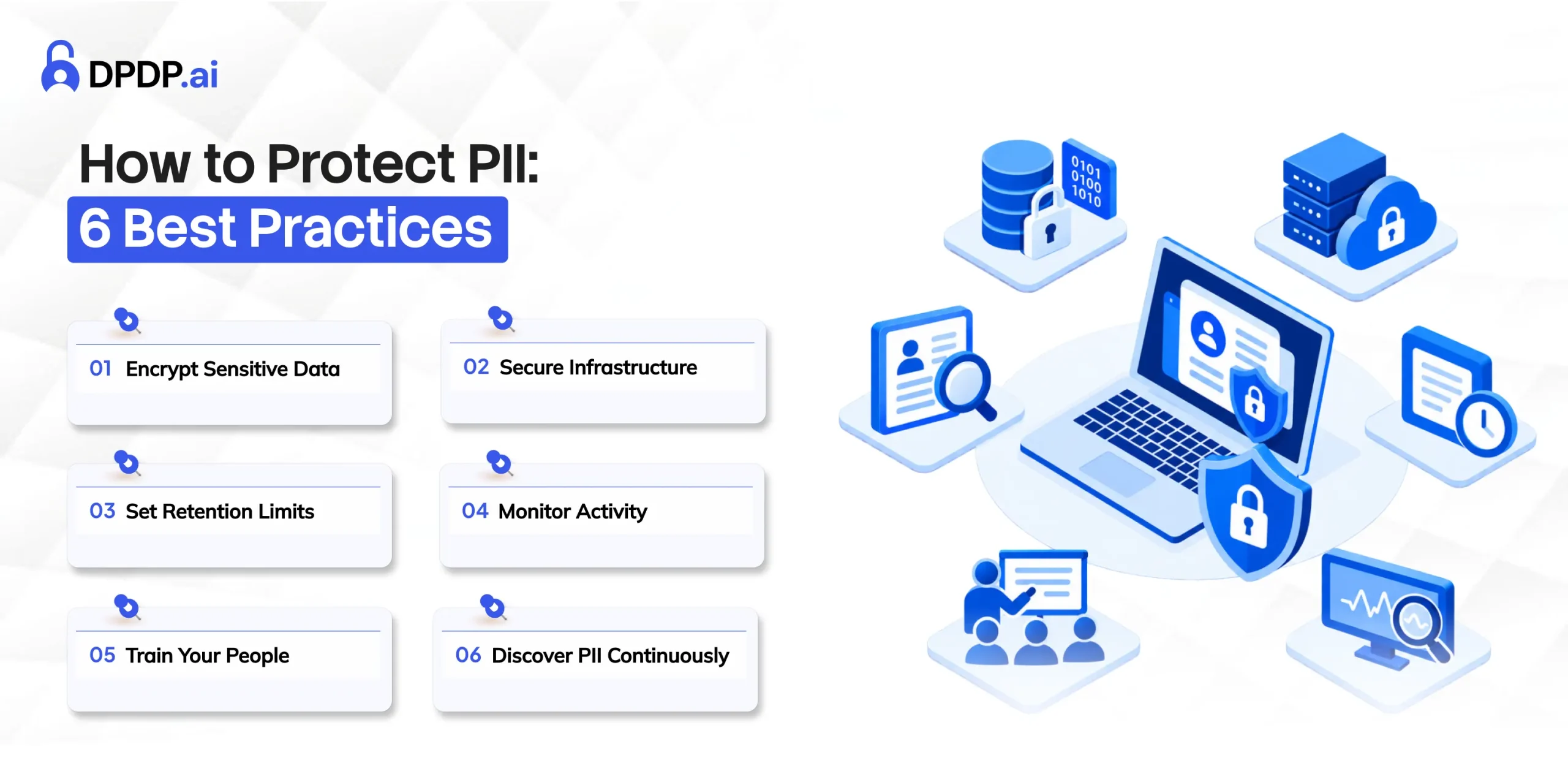
A few practices consistently make a difference:
Encrypt sensitive data. Information containing PII must be encrypted in storage, such as databases and data warehouses, as well as during its transmission between systems. This minimises the risks of any third party illegally accessing and reading the data.
Secure your infrastructure. Applications, databases, endpoints, and cloud platforms must be kept up to date, and only trusted sources must be used. This reduces the attack surface by eliminating known weaknesses that may be exploited to gain access to the PII of a company.
Set retention limits. Do not hold on to personal data longer than necessary. Review older records periodically and remove anything that is no longer needed.
Monitor activity. Watch for unusual access patterns around sensitive data so issues surface early rather than after the fact.
Train your people. Employees should know how to handle personal data safely and recognize common risks like phishing attempts.
Discover PII on an ongoing basis. Personal data has a way of resurfacing in new systems over time. Regular discovery keeps that movement visible instead of letting it go unnoticed.
What are the types of PII?
Some information can identify a person very clearly, while other details may only become identifying when combined with additional information.
Sensitive PII
Sensitive PII can create a higher risk if it is exposed or misused. Examples include:
- National identification numbers
- Passport or driver’s licence numbers
- Bank and financial account details
- Medical and health information
- Biometric information, such as fingerprints
Because this type of information can have serious consequences if misused, it generally requires stronger protection.
Non-Sensitive PII
Non-sensitive PII may seem less risky on its own, but it can still contribute to identifying a person when combined with other information. Examples include:
- Full name
- Email address
- Phone number
- Home address
- Date and place of birth
- Gender
The DPDP Act uses the broader concept of “personal data” rather than dividing information into sensitive and non-sensitive PII categories. This means organisations should not assume that information is outside privacy requirements simply because it appears less sensitive.
Why does every business need PII discovery tools?
As a business grows, tracking personal data manually becomes difficult. PII discovery tools can automatically scan large amounts of data and find information that may be missed during manual checks.
With the right tooling, organisations can:
- Find hidden PII buried in unexpected files or data sources.
- Cut down manual effort by automating what would otherwise be a slow, exhaustive search.
- Gain clearer visibility into the personal information scattered across their environment.
- Stay aligned with privacy requirements, including those under India’s DPDP Act, 2023.
- Respond to data requests faster, whether that’s an access, correction, or deletion request.
- Trim unnecessary data by identifying outdated or duplicate records that no longer serve a purpose.
This visibility can also help organisations understand what personal data they hold when meeting DPDP-related obligations, such as responding to Data Principal requests and managing personal data throughout its lifecycle.
What to look for in a PII Discovery tool?
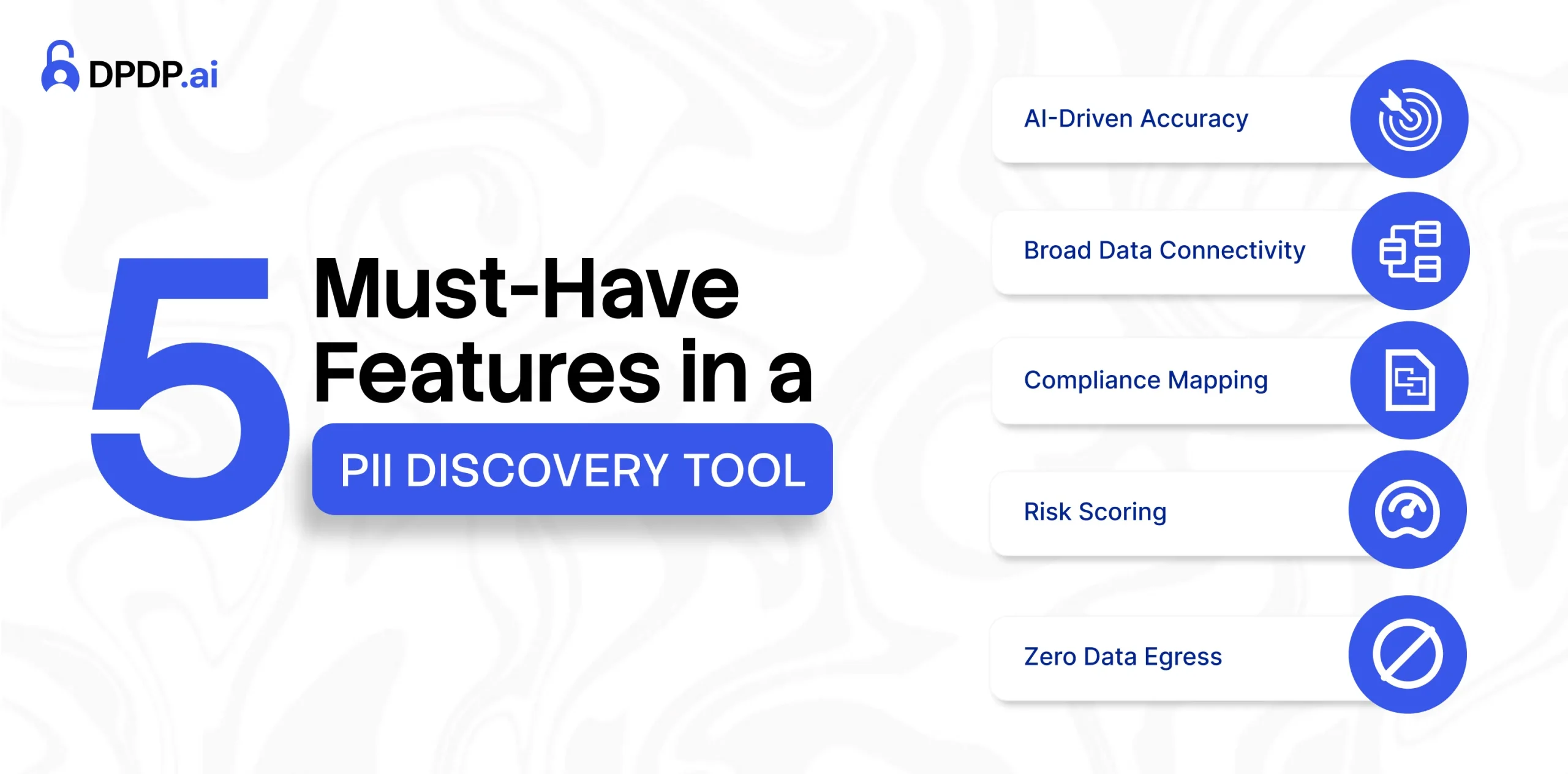
AI-driven accuracy. The tool should apply AI techniques such as Natural Language Processing (NLP) and Named Entity Recognition (NER) to understand data in context — distinguishing genuine PII from data that merely resembles it, and cutting down on false positives.
Broad data connectivity. Personal information rarely sits in one place. A strong discovery tool should connect across databases, documents, cloud storage, SaaS applications, and on-premises systems alike.
Compliance mapping. The tool should tie discovered PII back to relevant privacy frameworks — GDPR, HIPAA, CCPA, and India’s DPDP Act among them — so teams can quickly understand their obligations for each type of data found.
Risk scoring. Not every piece of personal data carries equal risk. Scoring data by sensitivity and exposure helps security teams prioritize where attention is needed most.
Zero data egress. Sensitive data should never have to leave the organisation’s own environment to be scanned. A zero-data-egress approach keeps raw data within the secure network throughout the discovery process.
Why do manual methods fail?
Manual PII checks might hold up when a business handles small volumes of data, but they buckle quickly as that volume grows.
Too much data. Reviewing thousands of files and records by hand is enormously time-consuming.
PII hides well. Personal information often sits inside PDFs, scanned documents, images, and other formats that are easy to overlook.
Data changes often. New information gets added constantly, so yesterday’s spreadsheet or review is quickly out of date.
People make mistakes. Manual reviews are prone to missed or mislabeled information.
Repetition is costly. Doing this kind of check regularly, by hand, demands a level of ongoing effort most teams can’t sustain.
Conclusion
Companies are collecting personal data across more systems, so understanding what data they have and how it is being managed is increasingly important. India’s DPDP Act, 2023 emphasizes responsible processing of digital personal data and gives Data Principals rights over their data. For organisations, this means that privacy management is increasingly about understanding the personal data they hold.
PII discovery tools can help businesses identify personal information across their environment without relying on manual checks alone. Good privacy and security practices can help organisations manage personal data better, respond to data-related requests and build stronger trust with the people whose information they manage.
FAQs
Ques: What is an example of personally identifiable information (PII)?
Ans: Examples of PII can be your name, email address, phone number, home address, government ID, or financial account details.
Ques: How to identify PII data?
Ans: To identify PII data we need to look for information that can identify a person directly or when combined with other details, such as names, contact details, IDs, or account information.
Ques: Is it true that PII consists of any detail that can be used to recognize or trace your identity?
Ans: Yes. PII involves information that can identify or help to identify a specific person, either alone or when combined with other information.
Ques: Who is responsible for protecting PII?
Ans: The organisation collecting or processing the data is responsible for protecting it through appropriate privacy and security measures.
Ques: What is not considered PII?
Ans: Information that cannot identify or be linked to a specific individual, such as general statistics or fully anonymised data, is generally not considered PII.