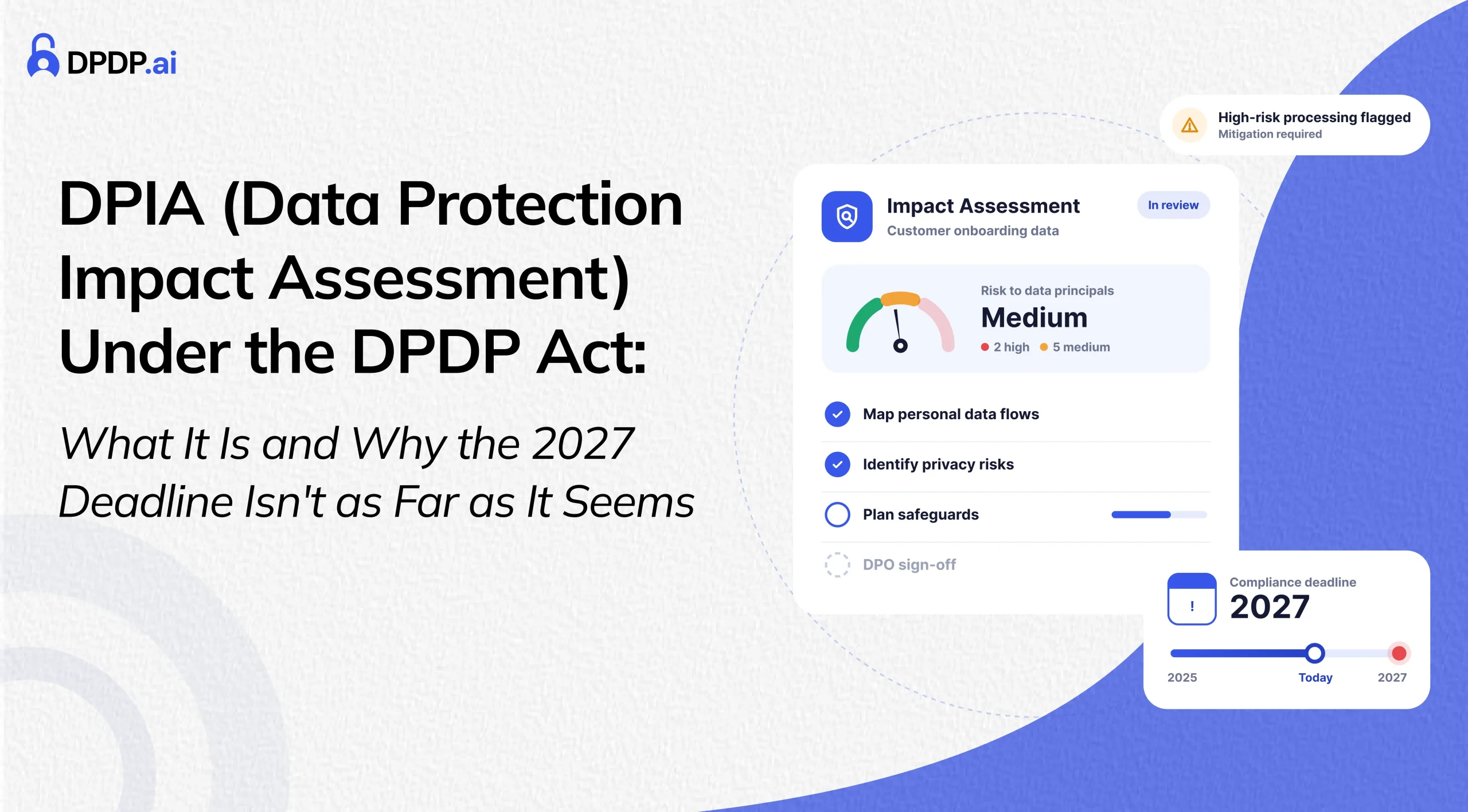
A Data Protection Impact Assessment is a systematic approach to identifying, addressing, and reducing the risks related to data processing activities.
Section 10(2)(c) of Digital Personal Data Protection Act, 2023 makes the DPIAs a mandatory compliance tool for Significant Data Fiduciaries (SDFs) as certain organisations are engaged in high-risk data processing.
For more information regarding DPIA under the DPDP Act, read along.
What is DPIA Full Form?
The full form for DPIA is Data Protection Impact Assessment. So what does DPIA stand for in practice? DPIA is a privacy risk assessment that is done to identify and diminish the potential privacy risks. It is a crucial part of demonstrating compliance with privacy regulations such as GDPR and the DPDP Act.
A regular compliance audit examines what has already been done whereas a DPIA is conducted before a new processing activity, system change, or a product launch. This allows the organisations to establish different strategies to mitigate those risks. DPIA is genuine evidence to prove that your organisation is working to alleviate privacy risks.
Under the DPDP Act, a DPIA is not automatically required for every organisation, it is applicable for-
Significant Data Fiduciaries (SDFs): Under Section 10(2)(c) of the DPDP Act, organisations that are classified as SDFs must conduct DPIAs and a data protection audit once every twelve months.
Government Announcement: Special categories and sectors identified by the central government or the Data Protection Board of India (DPBI).
Are DPIAs Necessary?
DPIAs are an essential part of a company’s obligations. Conducting a DPIA is a legal requirement for any company processing high-risk data. If a company fails to conduct DPIAs under the DPDP Act, it faces severe regulatory penalties, financial liabilities, and operational risks. Companies failing to conduct a DPIA and periodic audits can attract penalties of up to ₹150 crore.
In April 2024, Indian electronics brand boAt’s customer records were exposed via unpatched infrastructure. Names, addresses, emails, and phone numbers of over 7.5 million customers were leaked on the dark web. The cause for this breach is an unpatched, poorly monitored framework that holds large volumes of customer personal information.
This is exactly what a DPIA is meant to catch. This assessment requires an organisation to map:
Exactly where personal data lives
Evaluate the security controls around each system
Flag outdated or unmonitored infrastructure
So, are DPIAs necessary? Yes, they are. A breach like boAt’s was not a structured attack, it was a known category of risk that went unassessed. A DPIA checks the risks so the organisation can fix it. It turns “we didn’t check here” into “we already checked, and fixed it.”
What are the key components of a DPDP DPIA Report?
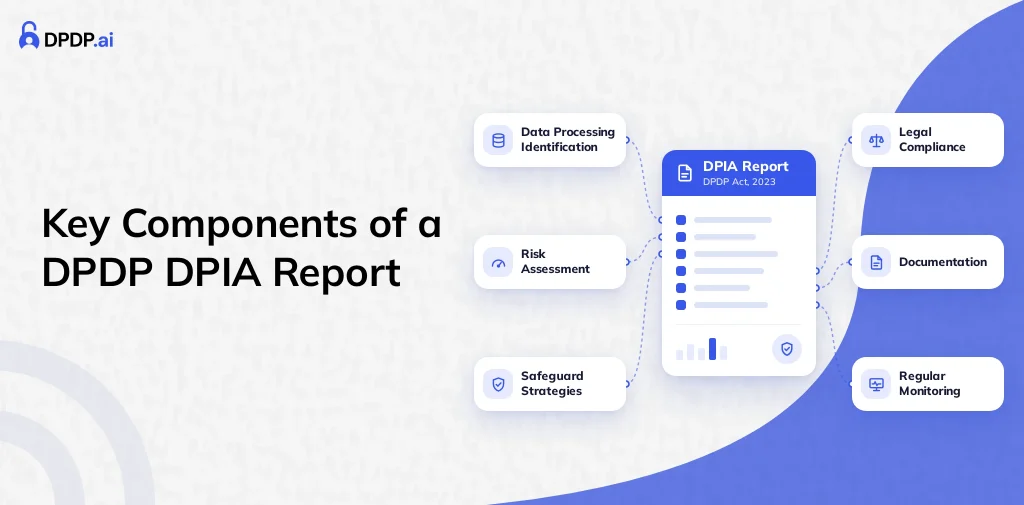
A DPIA under the DPDP Act is a systematic process that Significant Data Fiduciaries (SDFs) are required to carry out to identify, evaluate, and mitigate privacy risks before undertaking high-risk data processing activities. A well-structured DPIA report typically includes the following components:
- Data Processing Identification – A clear report about what data is collected, what is its purpose, and how it will be used.
- Risk Assessment – An evaluation and analysis of potential risks to privacy for Data Principals. This assessment helps in catching problems before they turn to real breaches.
- Safeguard Strategies – Implement mitigation methods like encryption, pseudonymization, and anonymization to reduce risks. After identifying the risks, this is where they are reduced.
- Legal Compliance – Confirming that the processing activity is in compliance with laws and regulations under the DPDP Act.
- Documentation – Maintaining a record of the entire assessment for accountability and transparency with stakeholders and regulatory authorities.
- Regular Monitoring – Periodic review and updating DPIAs as technologies, regulations, and business operations advance with time.
Who Needs to Conduct DPIAs?
Conducting a Data Protection Impact Assessment (DPIA) once every 12 months is legally mandatory only for Significant Data Fiduciaries (SDFs) that are designated by the Central Government. An organisation does not choose that status. These are the bodies that need to conduct DPIAs-
Significant Data Fiduciaries (SDFs)
Under Section 10 of the DPDP Act, only the bodies that are notified to be ‘significant’ by the government are legally required to conduct annual DPIAs. An organisation becomes significant based on factors such as:
The volume and sensitivity of personal data processed;
risk to the rights of Data Principal;
potential impact on the sovereignty and integrity of India;
risk to electoral democracy;
security of the State; and
public order
Third-Party Involvement
Even if an organisation hasn’t been officially notified as an SDF, its partners, banks, insurers, or hospitals often require third-party vendors and contractors to complete a DPIA as part of private business compliance.
High-Risk Sectors Where DPIAs Are Strongly Advisable
In sectors that deal with sensitive data or high-risk activities, conducting a DPIA is considered best practice, even without an SDF notification. These sectors are:
- Banking and Fintech
- Healthcare and Health-Tech
- Social Media and Online Platforms
- E-Commerce and Retail
Is a DPIA the Same as a Data Audit?
No they are not the same, they fulfill different functions, happen at different times, and present different outcomes.
DPIA (Data Protection Impact Assessment)
- Primary Function – It identifies and evaluates risks to Data Principals before starting a high-risk processing activity.
- Timing – It is conducted before launching a new product, feature, or processing activity.
- Focus – What could go wrong, and how could we prevent it?
- Result – DPIA brings a risk report with mitigation strategies to reduce potential risks.
- Who does it – It is mandatory for Significant Data Fiduciaries (SDFs) under the DPDP Act.
Data Audit
- Primary Function – It is done to review and verify the existing data handling practices to check compliance with laws, policies, and internal standards.
- Timing – It is conducted after data processing is already in place and on a scheduled basis.
- Focus – Are we following the rules properly and doing what we said we’d do?
- Result – An audit brings a compliance report highlighting gaps, violations, or if any area needs correction.
- Who does it – Any organisation handling personal data.
Many organisations use both together — a DPIA when introducing something new, and regular data audits to make sure ongoing practices stay compliant over time.
The DPIA Deadline Is Coming – Is Your Company Ready?
The DPIA is not in full force yet, but the time is closer than most companies realise.
The DPDP Act and its rules were officially notified on 13 November 2025, but it is still rolling out in phases, and they are –
- Phase 1 (November 2025): The Data Protection Board of India (DPBI) was formally established, along with foundational provisions.
- Phase 2 (November 2026): Registration and obligations for Consent Managers.
- Phase 3 (13 May 2027): Complete enforcement of all remaining statutory obligations and rules. This includes the DPIA requirement for Significant Data Fiduciaries, breach reporting duties, and enforcement of security safeguards with penalties of up to ₹250 crore.
So technically, the DPIA mandate isn’t enforceable today. But May 2027 is closer than it feels, and DPIAs aren’t something you can build overnight. They require mapping your entire data, assessing risk across systems, documenting safeguards, and getting sign-off. This process would easily take months, not weeks.
How DPDP.ai Helps You Manage DPIAs
Running DPIAs manually across different systems is exactly why most organisations struggle to stay on top of privacy risk. This unorganised data hides risks. There are delays caused by manual reviews. Also, bringing compliance evidence from scattered systems is very slow.
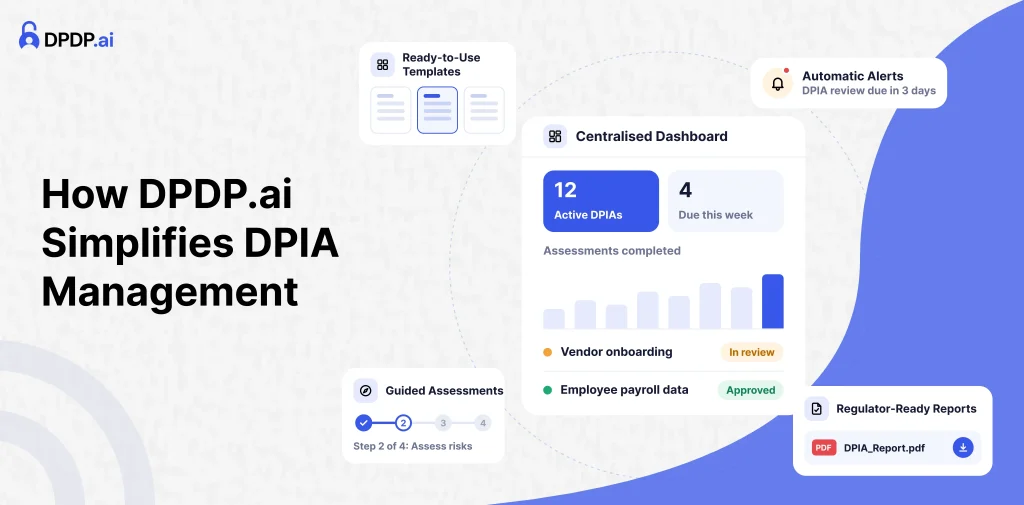
This is where DPDP.ai solves this by bringing DPIAs into one connected platform. The platform offers-
- Ready-made templates.
- Expert-guided steps to help you finish assessments faster.
- Automatic alerts when your data or processes change.
- Single dashboard to track risks and approvals across teams.
- One-click reports ready to show regulators.
Conclusion
A Data Protection Impact Assessment (DPIA) under India’s Digital Personal Data Protection Act, 2023 (DPDP Act) is a mandatory compliance tool which is used to recognise, evaluate, and reduce privacy risks and harms to individuals before launching high-risk data processing activities. DPIAs help the organisations to skip potential data breaches, financial penalties and losing customer trust.
While the full enforcement is phased until May 2027, waiting for that deadline isn’t smart; it is a risk. Companies that start mapping their data, assess risks, and build safeguards will be ahead of breaches, regulations, and competition.
FAQs
Ques: What is DPIA full form?
Ans: The expanded form of DPIA is Data Protection Impact Assessment.
Ques: What is DPIA?
Ans: Data Protection Impact Assessment (DPIA) is a systematic process used by organisations to identify, analyse, and minimise security risks before launching new projects.
Ques: What does a completed DPIA example look like?
Ans: A completed Data Protection Impact Assessment (DPIA) is a structured compliance document showing where personal data lives, identified risks, the safeguards applied to each risk, confirmation of legal compliance, and a documented sign-off.
Ques: What is the difference between a DPIA and a PIA?
Ans: A PIA (Privacy Impact Assessment) is a tool used to evaluate general privacy risks in any project or system.
Whereas, a DPIA (Data Protection Impact Assessment) is a legally mandated process under the DPDP Act. This is mandatory for data processing activities carrying high-risk.
Ques: How to conduct DPIA?
Ans: A DPIA under the DPDP Act generally follows six steps: map the data, assess the risks, apply safeguards, check legal compliance, document the process, and monitor it over time.
Ques: Who is responsible for conducting a DPIA?
Ans: Only Significant Data Fiduciaries (SDFs) are legally required to conduct DPIAs annually. These SDFs can only be notified by the Central Government.
Ques: Is data audit and DPIA the same?
Ans: No, they are not the same. A DPIA is conducted to assess potential risk before a new processing activity, while a data audit reviews existing practices.
Ques: What happens if a company fails to conduct a required DPIA?
Ans: Non-compliance with the DPDP Act can result in penalties of up to ₹150 crore.
Ques: When does the DPIA become mandatory?
Ans: The Data Protection Impact Assessment (DPIA) requirement under India’s DPDP Act becomes mandatory on 13 May 2027.