★★★★★
"We dropped the DPDP AI snippet into our footer and were collecting compliant cookie consent the same afternoon. Our Lighthouse score did not move an inch."
K
Karthik Subramaniam
Lead Frontend Engineer
TravelNest India - Chennai
★★★★★
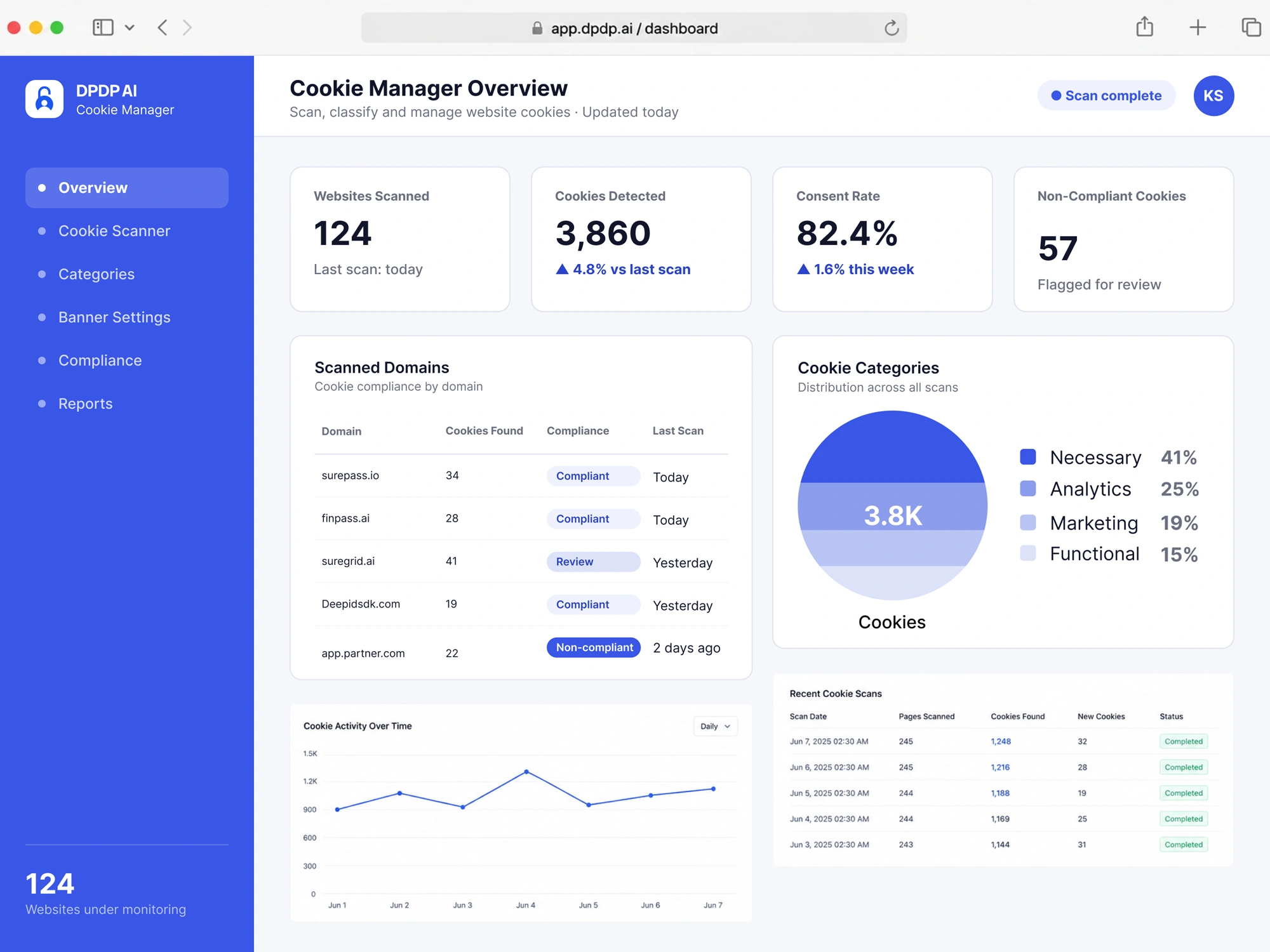
"The automatic cookie scan found three third-party trackers we did not even know we had. That alone was worth switching for - we were exposed and did not know it."
P
Priya Deshmukh
Data Protection Officer
QuickMed Health - Pune
★★★★★
"Google Consent Mode v2 worked out of the box. Our ad spend reporting stayed accurate even after enforcing opt-in for advertising cookies."
A
Aditya Bhatt
Performance Marketing Lead
StyleCart Retail - Ahmedabad
★★★★★
"Pricing that does not punish you for growth was the deciding factor. We pay one flat fee instead of worrying about per-cookie charges as traffic scales."
S
Shreya Pillai
Founder & CEO
LearnLoop EdTech - Kochi
★★★★★
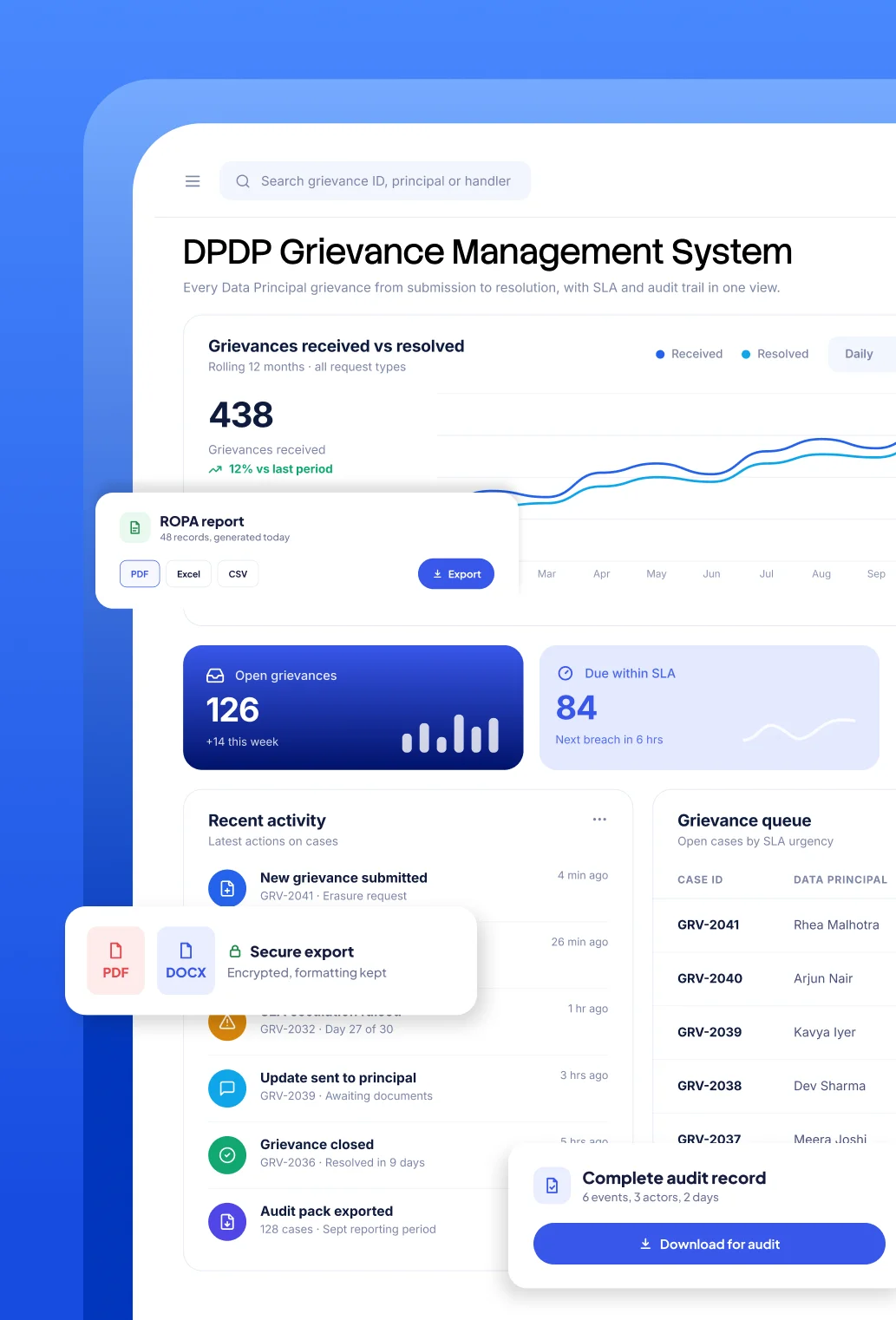
"When our auditors asked for proof of cookie consent across a sample of users, we exported the full trail in seconds. No PII, fully tamper-proof."
R
Rahul Varma
Chief Compliance Officer
SecureLend NBFC - Delhi
★★★★★
"Our visitors finally see a cookie banner in their own language instead of generic English legalese - and our opt-in rate actually went up because of it."
M
Meenal Joshi
Head of Growth
FarmConnect Agritech - Nagpur
★★★★★
"We dropped the DPDP AI snippet into our footer and were collecting compliant cookie consent the same afternoon. Our Lighthouse score did not move an inch."
K
Karthik Subramaniam
Lead Frontend Engineer
TravelNest India - Chennai
★★★★★
"The automatic cookie scan found three third-party trackers we did not even know we had. That alone was worth switching for - we were exposed and did not know it."
P
Priya Deshmukh
Data Protection Officer
QuickMed Health - Pune
★★★★★
"Google Consent Mode v2 worked out of the box. Our ad spend reporting stayed accurate even after enforcing opt-in for advertising cookies."
A
Aditya Bhatt
Performance Marketing Lead
StyleCart Retail - Ahmedabad
★★★★★
"Pricing that does not punish you for growth was the deciding factor. We pay one flat fee instead of worrying about per-cookie charges as traffic scales."
S
Shreya Pillai
Founder & CEO
LearnLoop EdTech - Kochi
★★★★★
"When our auditors asked for proof of cookie consent across a sample of users, we exported the full trail in seconds. No PII, fully tamper-proof."
R
Rahul Varma
Chief Compliance Officer
SecureLend NBFC - Delhi
★★★★★
"Our visitors finally see a cookie banner in their own language instead of generic English legalese - and our opt-in rate actually went up because of it."
M
Meenal Joshi
Head of Growth
FarmConnect Agritech - Nagpur