The Digital Personal Data Protection (DPDP) Act has changed the way digital personal data is handled in India. This has raised challenges for all businesses dealing with the personal data of individuals or Data Principals. Now organizations must know what personal data they are collecting, where it is located, why it is being processed, who can access it, and when it should be deleted.
Here, data discovery and classification help organizations identify personal data across databases, applications, documents, cloud environments, and other repositories. So, the organization implements appropriate technical and organizational measures and reasonable security safeguards.
What is Data Discovery?
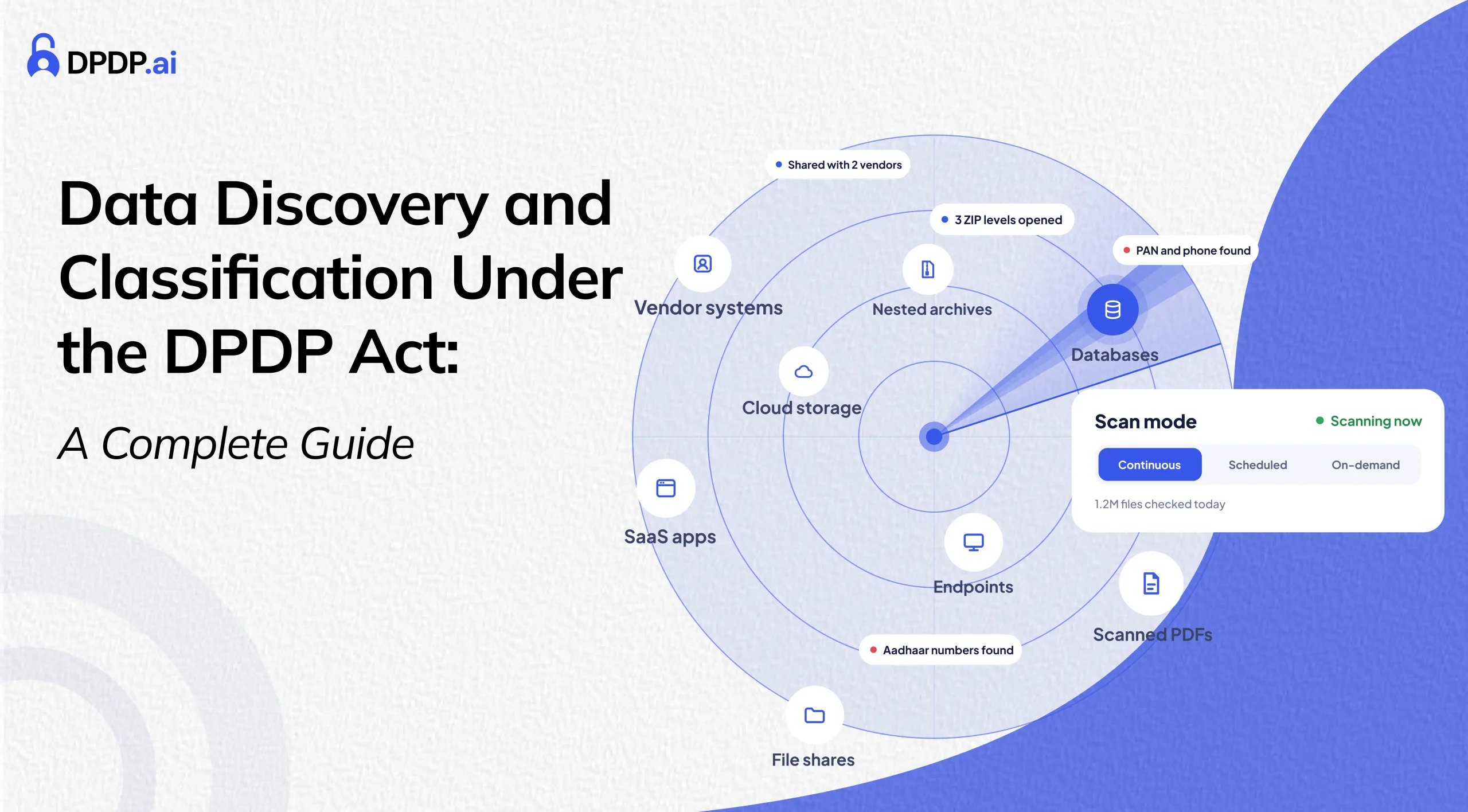
Data discovery is the process of identifying and locating data across an organization’s environment. DPDP Act focuses on the identification of digital personal data that an organization processes. Personal data may exist in more places than an organization’s primary business applications. For example, data can be stored in databases, CRM, ERP systems, HR platforms, SaaS applications, PDFs, spreadsheets, etc.
What is Data Classification?
Data Classification is the process of categorizing data according to characteristics such as sensitivity and confidentiality, business value, risk or regulatory requirements.
Why Data Discovery and Classification Matters in DPDP Act?
Data discovery and classification can help organizations operationalize and support several DPDP obligations.:
Data Principal Requests
When a data principal requests correction or erasure of their personal data, an organization needs to locate the relevant information across the system where it is stored or processed.
Without proper data visibility, you cannot respond quickly.
Data Breach Response
When a data breach occurs, it becomes crucial for businesses to quickly determine what information may have been affected. Notify individuals and authorities.
If the location and type of personal information are unknown, valuable time for reporting can be lost in finding affected data and systems.
In simple words, good data visibility helps organizations respond more efficiently.
Data Minimization
Data discovery supports purpose limitation, retention, and deletion practices by helping organizations identify unnecessary or outdated personal data.
Data Discovery vs. Data Classification
Data discovery and classification are complementary but different processes:
| Data Discovery | Data Classification | |
| Purpose | Locate Data | Understand and categorize data |
| Main Question | Where is the data? | What is the data? |
| Focus | Visibility | Context and Sensitivity |
| Output | Data locations and records | Categorization and handling requirements |
| Examples | Database, file, cloud folder, email | Public, internal, confidential, personal data |
| Role | Finds information | Helps determine how information should be handled |
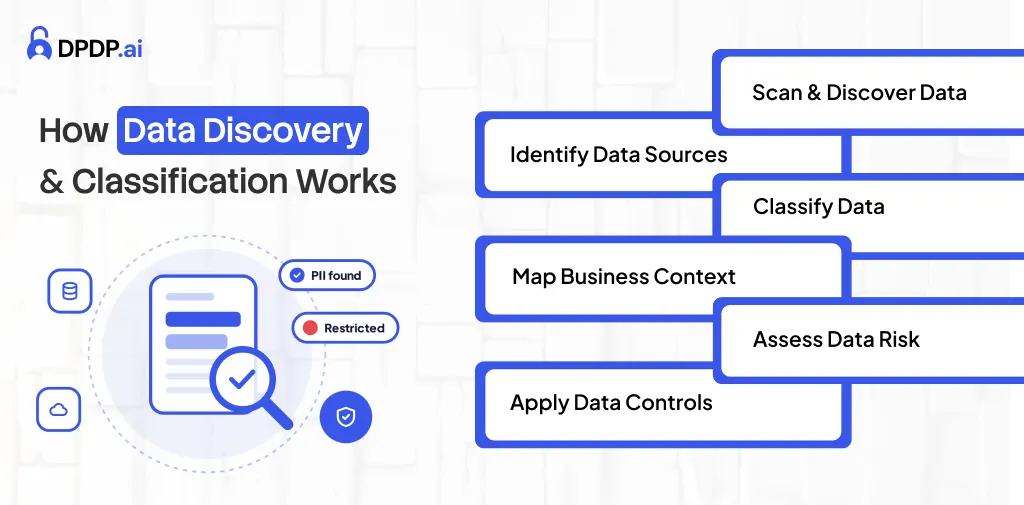
How does Data Discovery and Classification Work?
A typical data discovery and classification process can be divided into several stages:
Step 1: Identify Data Sources
The first step involves identifying all the locations where data may exist, including databases, file servers, employee devices, third-party applications, and backup environments.
Step 2: Scan and Discover Data
The next step is to scan these environments to identify the information they contain. The discovery mechanism can look for names, email addresses, phone numbers, addresses, health-related information, etc.
For unstructured data, discovery may need to inspect the actual content of documents and spreadsheets and other files rather than relying on databases.
Step 3: Classify and Detect Data
Once information is identified, classification rules can categorize it according to predefined policies.
Step 4: Map Data to Business Context
Data discovery becomes more useful when organizations understand the context surrounding the information. Businesses can map data to applications, business processes, data owners, processing activities, etc.
Step 5: Assess Risk
Not every piece of discovered data presents the same level of risk. Organizations can use classification information to identify areas that require more attention.
Step 6: Apply Appropriate Controls
Classification can then feed into security and governance controls. Depending on organizational policies, classified data can be used to inform: access controls, encryption, data masking, DLP policies, retention policies, monitoring, sharing restrictions, and data deletion workflows.
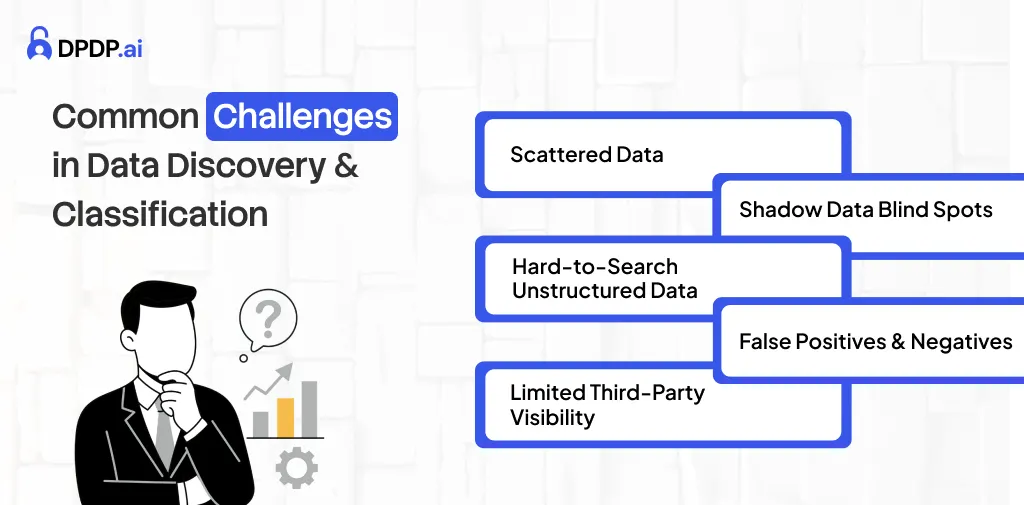
What are the common challenges in Data Discovery and Classification?
Organizations face various challenges in data discovery and classification:
Data is scattered across multiple systems – Most of the business uses dozens and hundreds of applications. A single individual’s information may exist across CRM, Billing, Support, marketing, and other platforms.
Unstructured Data is Difficult to Search – Personal data can be difficult to find inside documents, emails, spreadsheets, and free-text fields.
Shadow Data Creates Blind Spots – Employers can create local copies, temporary files, or test datasets that are not included in business systems.
Third-Party Data is Harder to Monitor
Organizations share data with cloud providers, vendors, processors, and other external parties. It makes it difficult to maintain visibility across the complete data lifecycle.
False Positives and False Negatives
Automated tools may incorrectly classify ordinary information as sensitive or fail to detect information that appears in an unexpected format. This is why discovery and classification systems should support validation, tuning, and human oversight.
DPDP.ai Data Discovery and Classification Platform for DPDP Compliance
DPDP.ai offers a data discovery and classification platform for the business to automatically discover and classify PII across business systems and help in be compliant with DPDP regulations with audit trails.
Conclusion
DPDP compliance requires a proper mechanism to collect and handle personal data of the data principal, including obtaining valid consent where consent is the applicable basis for processing, while recognizing other lawful grounds provided under the Act. Data Discovery and classification help organizations manage data securely and follow the obligations. This helps prevent the risk of data breaches and massive penalties. Data Discovery helps in finding personal data in business systems, and classification helps in categorising the data.
FAQs
Ques: What are the data classification levels C1, C2, C3, and C4?
Ans: Generally, C1 = Public, C2 = Internal, C3 = Confidential, and C4 = Restricted/Highly Confidential, though an organization may define these levels differently.
Ques: How can an organization automate data discovery and classification?
Ans: Organizations can automate data discovery and classification using data discovery tools, pattern matching, metadata analysis, machine learning, and predefined classification policies.
Ques: How does data discovery support DPDP data governance?
Ans: Data Discovery helps organizations identify and map personal data, understand where it is stored and processed, and apply appropriate governance and protection controls.
Ques: What are four types of data classification?
Ans: Four commonly used organizational classification levels are Public, Internal, Confidential, and Restricted.
Ques: What is the difference between Data Discovery and Classification?
Ans: The main difference between data dicovery and classification is discovey focus on finding personal data and classification categorise the data according to risk.
Ques: Can data discovery help identify data that should be deleted?
Ans: Yes, Data discovery can help identify personal data and its copies across systems, supporting retention and deletion workflows where deletion is required or appropriate.