Organisations deal with personal data across different teams, systems and third parties.As organisations handle more data, it becomes harder to keep track of what they collect, why they use it, where they keep it, and who can access it. A Record of Processing Activities (RoPA) bring this information together in one place.
The Digital Personal Data Protection (DPDP) Act, 2023 does not require organisations to maintain a RoPA but maintaining it can help organisations better understand and manage their data processing activities.
What is RoPA?
Records of Processing Activities (RoPA) is a structured record of what personal data an organisation collects and how it uses, shares and processes it. It gives a clear picture of an organisation’s data processing activities.
Organisations can use a spreadsheet, document, or privacy management platform for maintaining a RoPA. Keeping it organised helps teams to understand how personal data moves through the organisation and identify areas that need further privacy or compliance review.
Is RoPA required under the DPDP Act?
No, Digital Personal Data Protection (DPDP) Act does not require organisations to maintain a Record of Processing Activities (RoPA). This is different from the GDPR, in which Article 30 specifically requires certain organisations to maintain records of processing activities.
The DPDP Rules also place several responsibilities on Data Fiduciaries. While the Rules do not specifically require a RoPA, having a clear record of how personal data is processed can make it easier to meet these responsibilities, including:
- Giving Data Principals a notice with an itemised description of the personal data and the specified purpose.
- Applying reasonable security safeguards, including retaining processing logs for at least one year.
- Erasing personal data once its purpose is served, within the timelines.
- Notifying Data Principals and the Data Protection Board of a personal data breach.
- Carrying out Data Protection Impact Assessments and audits, if designated a Significant Data Fiduciary
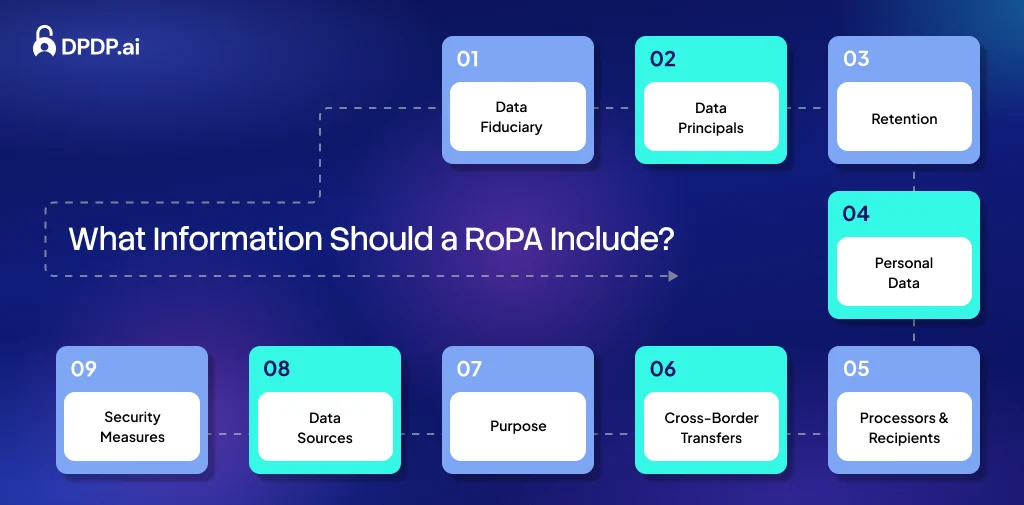
What information should a RoPA include?
Key information that can be included:
- Data Fiduciary: Entity which determines the purpose and means of the processing.
- Processing Activity: What the organisation is doing with the personal data. Purpose: Why the personal data is being collected and processed.
- Data Principals: The individuals whose personal data is being processed, such as customers, employees, or users.
- Data Sources: Where the personal data comes from.
- Systems and Applications: Where the data is stored or processed.
- Data Processors and Recipients: Third parties or service providers that receive or process the data.
- Retention: For how long the personal data is kept and when it should be deleted.
- Cross-Border Transfers: If the personal data is transferred outside India.
- Security Measures: The safeguards used to protect the personal data.
- Responsible Team: The department or the person responsible for the processing activity.
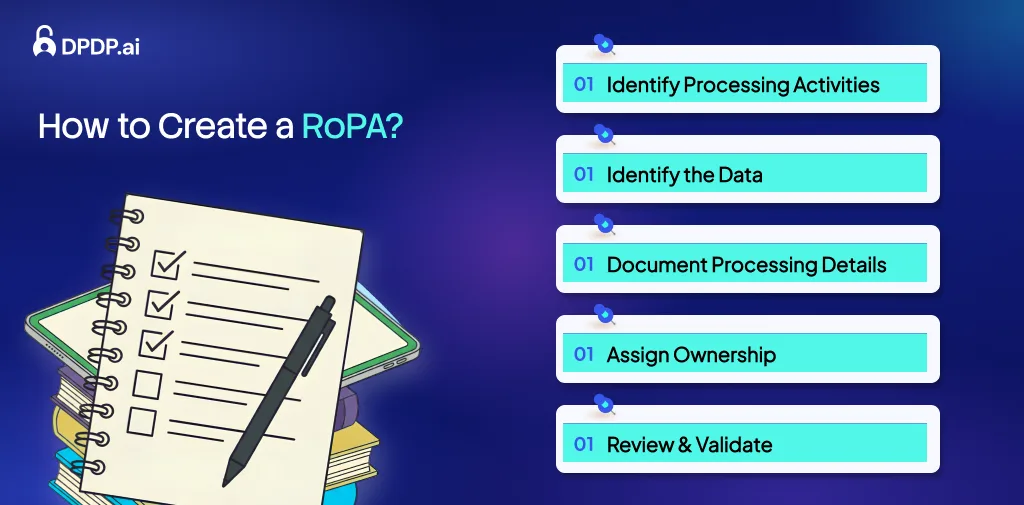
How to create a RoPA?
Creating a RoPA involves –
- Identify processing activities: Make a list of all the procedures related to personal information.
- Identify the data involved: Record what personal information is used, who is the owner of that data and the sources
- Document the processing: Record the purpose, systems, third parties, retention period, and other relevant details for each activity.
- Assign ownership: Identify the team or person responsible for each processing activity.
- Review the record: Go through the documentation with the relevant stakeholders and make sure that everything is accurate and complete.
How to maintain and update a RoPA?
Key practices include:
- Update after changes: Update the RoPA when you add a new system, processing activity, type of data, or third-party processor.
- Assign responsibility: Give a specific person or team responsibility for keeping the RoPA updated.
- Use consistent formats: Use the same structure and terms throughout the RoPA so the information stays clear and easy to follow.
- Involve relevant teams: Get information from the teams that handle personal data directly.
- Review regularly: Check records periodically and update them when processing changes.
- Keep changes documented: Maintain a record of significant updates so changes can be tracked over time.
- Protect the RoPA: Restrict access to authorised users and protect the information it contains.
- Keep an audit trail: Track important changes to maintain accountability and visibility.
What are the benefits of maintaining RoPA?
There are some common benefits of maintaining RoPA.
- Accountability: A RoPA keeps a record of how personal data is handled and shows that the organisation is keeping track of its privacy practices.
- Improves data visibility: Teams can see what personal data is being used, why it is needed, where it is stored, and who handles it.
- Helps with third-party management: Makes it easier to keep track of processors and other third parties who are processing personal data and reviewing their relevant arrangements.
- Supports audits and reviews: Helps teams quickly provide accurate information during internal reviews, audits, or regulatory inquiries.
- Supports security and risk management: Assists organizations to identify where personal data is processed so they can determine whether appropriate security measures and controls are in place.
- Keeps compliance organised: Helps teams to find the gaps and update their records when the way they use personal data changes.
What are the common challenges in maintaining a RoPA?
There are some common challenges in maintaining a RoPA.
- Changing how data flows: New systems, applications, and processes can change how personal data is collected and used.
- Incomplete information: The teams may vary in the amount of information provided to document their processing activities.
- Shadow IT: Applications or tools not formally recorded by the organisation may process personal data.
- Outdated records: Information can quickly become outdated if changes are not reflected in the RoPA.
- Manual effort: Maintaining records on spreadsheets or separate documents can be difficult to manage and might not be good for long term.
How can technology help manage RoPA?
Technology can simplify RoPA management by reducing manual work and keeping processing information organised in one place. It can help manage RoPA.
- Discover personal data: Identify personal data across databases, applications, cloud environments, and other systems.
- Map data processing: Connect data, systems, processing activities, and third parties to create a clearer view of data flows.
- Centralise RoPA records: Store processing information in one place instead of maintaining multiple spreadsheets and documents.
- Automate updates: Detect changes in data processing and update the records.
- Generate reports: Create reports for internal documentation, compliance and audit trails.
Conclusion
RoPA provides organisations with a structured way of keeping track of their personal data processing activities. The DPDP Act does not explicitly require a RoPA but having one can help in better managing privacy and compliance.
It is important to keep the RoPA accurate and up to date as data processing activities change. With the right processes and technology, organisations can better manage visibility of personal data, and better respond to privacy and compliance needs.
FAQs
Ques: What is the purpose of Records of Processing Activities?
Ans: The purpose of RoPA is to maintain a record of an organisation’s processing of personal data. It enables the team to have an understanding of the data that is collected, its application, its storage location and the responsible party.
Ques: What are the requirements for a RoPA?
Ans: A RoPA can include details such as processing activities, purposes, personal data categories, Data Principals, systems, processors, retention periods, cross-border transfers and security measures.
Ques: Why is RoPA important?
Ans: RoPA is important because it helps organisations maintain visibility over their personal data processing. It can also support privacy reviews, identify gaps and help manage DPDP compliance activities.
Ques: Is RoPA mandatory under the DPDP Act?
Ans: No. The DPDP Act does not specifically require organisations to maintain a RoPA. However, organisations can use it as a practical tool to manage and document their data processing activities.
Ques: How to start a RoPA?
Ans: Start by identifying all business activities that involve personal data. Then document the purpose, data involved, systems, third parties and other relevant details for each activity.
Ques: What are examples of RoPA?
Ans: There are some common examples of RoPA which include records for employee recruitment, customer onboarding, payroll, marketing, customer support, and vendor management.