Definition
Accountability is the responsibility of an organisation to take ownership of its actions and decisions and demonstrate that it meets its obligations. In data protection, it means being responsible for how personal data is collected, used, stored, and protected.
It is a connection between a law and the actions of a company. When there is a requirement to know the reasons for the collection of personal information and ways in which it is being used, you should be able to provide an answer based on evidence.
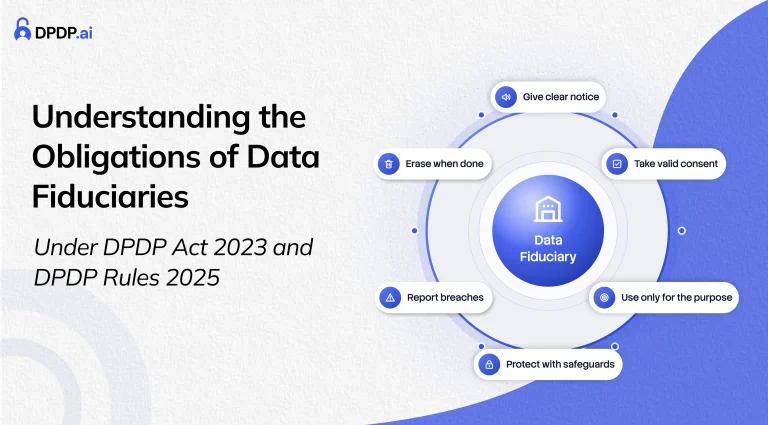
According to India’s Digital Personal Data Protection (DPDP) Act, 2023, such responsibility lies with the Data Fiduciary, which is an individual who decides how and for which purpose personal data will be used. As mentioned in Section 8(1), A Data Fiduciary remains responsible for complying with the DPDP Act and its Rules, even when a Data Processor handles personal data on its behalf. In addition, the Data Fiduciary has to be able to prove that the necessary notification was sent, and that consent was received.
Significant Data Fiduciaries have a responsibility to appoint a Data Protection Officer in India and engage an independent data auditor.
Accountability can become a challenge when:
- Privacy policies exist but are not followed in everyday work.
- who is responsible for protecting personal data is unclear.
- Organisations cannot explain how personal data is accessed, used or shared.
Organisations can manage accountability by assigning clear responsibilities, establishing consistent data handling procedures and reviewing their privacy practices.
Frequently asked questions
Does having a privacy policy imply accountability?
No. A policy only states what you intend to do. Accountability means you can prove you actually follow it, through logs, dated records and review notes.
Do data audit and accountability mean the same?
No. A data audit is a check of how personal data is handled and whether it meets the rules. Accountability is the ongoing duty to follow those rules and be able to show that you do, backed by clear responsibilities and records.
Can accountability records be created after a complaint?
A record is only credible if it was made when the event happened. After a complaint, collect what you already have, log your response with dates, and fix the gaps going forward. Never backdate anything.
Is accountability the same as compliance?
No. Compliance is meeting the legal requirements. Accountability is being able to demonstrate that you met them.