Definition
It is a person or an organisation is responsible for deciding the purpose and means of the processing of personal data. It determines the purposes of the processing of personal data and undertakes the responsibility for the proper processing of data according to the required data protection standards.
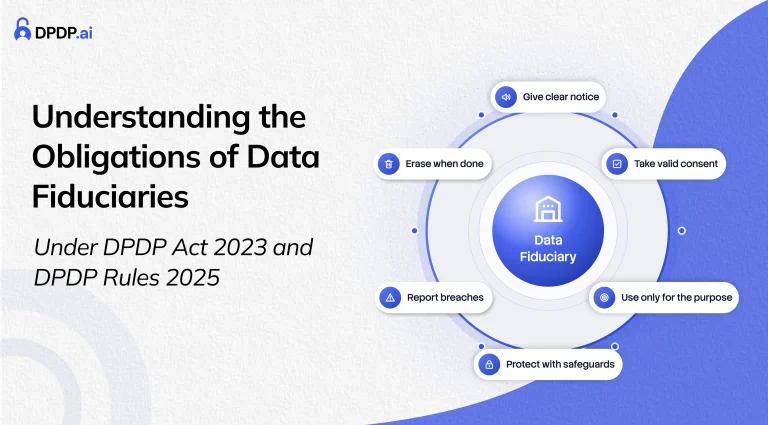
The DPDP Act of 2023 describes the following obligations of it:
- Make sure that the personal data is processed legally.
- Notify the Data Principals and obtain a valid consent.
- Take appropriate security measures to protect the provided personal data.
- Inform relevant persons about the breaches of personal data.
- Facilitate the rights of Data Principals under the DPDP Act.
- Erase personal data when consent is withdrawn or the specified purpose is no longer served.
- Stay within laws while using Data Processors.
Frequently asked questions.
Who can be called a Data Fiduciary?
Any person or organisation responsible for determining the purpose and means of processing digital personal data can be termed it..
What obligations does the Data Fiduciary have?
It has obligations to protect personal data, obtain valid consent where required, ensure lawful data processing, maintain data accuracy and security and comply with the DPDP Act.
What is Defined as Significant Data Fiduciary?
It is an entity designated by the Central Government based on factors such as the volume and sensitivity of personal data processed and the associated risks. It must meet additional compliance requirements.