Every time you visit a website, it silently remembers you. Small files called cookies sit on your device, holding onto your login preferences, the pages you viewed, and the items you lingered over. All so the site can shape your next visit around you.
This tracking runs through almost every corner of the internet. But personalization raises real questions — Who knows this much about you, and what happens to your personal data? It is a major issue than it sounds. Only 79% of countries have a data privacy law in force today.
Growing privacy concerns and regulations that followed made it a legal requirement for websites to disclose their cookie usage. That’s where Cookie Policy comes in.
Read on to understand it better.
What Is a Cookie Policy?
A cookie policy is a document or guideline containing a list of all the details of cookies on a website. Cookie policies act as binding agreements between websites and users.
While most visitors click through without reading it, properly managing these policies protects your users and your business too. Understanding cookie policies is a practical necessity that keeps you compliant and reliable.
A cookie policy indicates:
- The types of cookies used.
- What is the purpose of them?
- How long will they remain on a user’s device?
- Whether the third parties have access to the collected data.
- Steps for managing or disabling cookies through browser settings.
Does My Website Need A Cookie Policy?
A simple answer is, if your website uses cookies. Then yes, you need a cookie policy. Cookie policies are necessary when:
You use non-essential cookies
A cookie policy is compulsory when using non-essential cookies as they track users on a website. This is because privacy laws require transparency. It is about telling the user what these tracking files do. You must also get their clear permission before collecting their data. This consent must be fully understandable by users about what data you are gathering and why.
When you have a published policy, it proves your site operates transparently. It gives users instructions on how to change or withdraw their consent later.
You serve EU or UK users.
When handling EU or UK users, a cookie policy is legally necessary. It is due to their regional privacy laws. These laws mandate strict transparency and explicit user consent before collecting non-essential data on someone’s device. The core legal frameworks that govern this necessity are EU ePrivacy Directive (cookie law), the General Data Protection Regulation (GDPR) and UK Privacy and Electronic Communications Regulations (PECR).
You serve California residents
A cookie policy and disclosure are essential when serving California residents. It is because tracking cookies collect “personal information” under the California Consumer Privacy Act and California Privacy Rights Act (CCPA/CPRA). Websites are required to provide a clear link reading “Do Not Sell or Share My Personal Information” to let users opt out.
Under California law, cookie data that track browser behavior are legally defined as personal information. So businesses must tell users, at or before data collection, what data cookies collect and why.
You collect sensitive data in India
A cookie policy is required in India when collecting sensitive data. This provides the mandatory notice explaining what data is collected, the specific purpose of tracking, third-party sharing, and how users can withdraw their consent. It is because of statutory transparency mandates and explicit consent requirements under the Digital Personal Data Protection (DPDP) Act, 2023 and the SPDI Rules, 2011.
Under the DPDP Act organizations must obtain clear, affirmative, explicit opt-in consent before tracking or processing personal data. Also if tracking cookies gather sensitive personal data or information (SPDI) under the IT Rules, they trigger strict statutory obligations. Non-compliance under the DPDP Act framework can result in severe financial penalties.
Is Privacy Policy And Cookie Policy The Same?
Privacy policy has a broader aspect than cookie policy. A privacy policy covers how an organisation handles every personal data across its entire business. On the other hand, a cookie policy focuses only on tracking systems and cookies used on a website.
Both of them are legal transparency documents, yet they serve different purposes, span different domains, and fulfill different regulatory requirements.
You can technically include a cookie policy section inside the main privacy policy. Most of the websites use separate pages. Keeping them separate makes it easier to upgrade your cookie lists without changing your core legal notice.
Importance of Cookie Policies
Cookie policies are used to inform the users of their usage of cookies. Cookie policy is a legal document required in most jurisdictions where data privacy laws exist. It is really important for users to understand what it says.
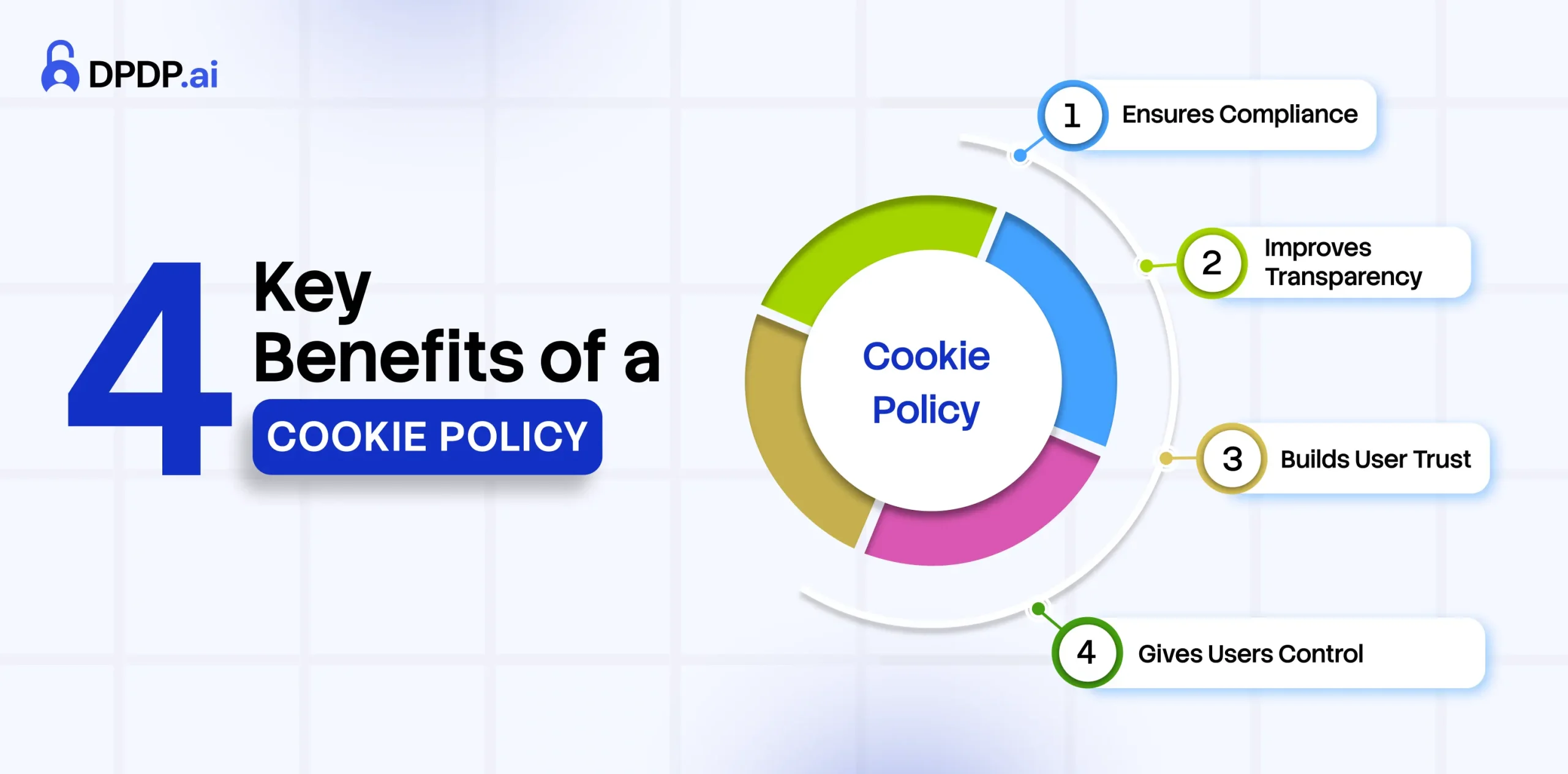
Below are the main purposes of a Cookie Policy-
Statutory Compliance– Major data privacy laws mandate that websites disclose how they collect and process user’s data through cookies. Websites are also required to obtain consent for non-essential cookies. Non-compliance will result in fines or legal consequences.
Transparency– It educates users on what cookies are used, why they are used, and how long they will last. This helps the user to understand how their data is being collected, used and processed.
Builds Trust– Users are more prone to trust a website that openly discloses its cookie tracking practices. A well-structured cookie policy demonstrates a business’s commitment to data privacy and ethical data handling with its audience.
User Authority- A cookie policy protects user’s privacy. It provides instructions to users how they can manage, block, delete cookies or even opt-out of non-essential cookies through browser settings, preference centers or consent management tools.
What Should Be Included In A Cookie Policy?
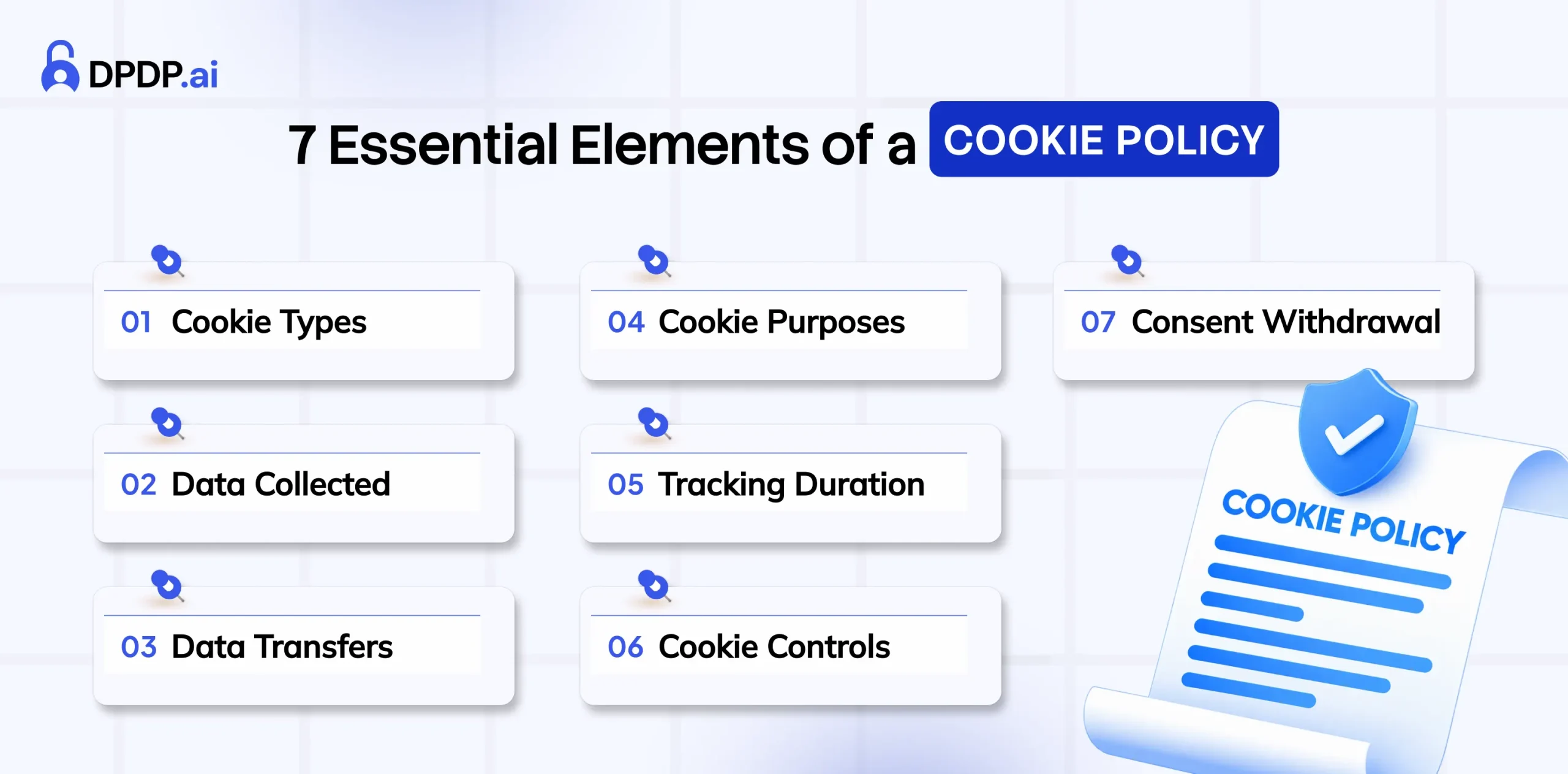
A cookie policy on your website should clearly explain-
Which kinds of cookies are used on your site?
Listing the types of cookies you use on your website is required to comply with privacy laws, it builds user trust, and explains data collection. It should specify what type of cookies you use, strictly necessary, functional, analytics, or advertising.
What kind of personal information do these cookies collect?
This helps in complying with strict global privacy laws and to be completely honest with users.
To which countries or regions will the personal data be transferred or processed?
This is because privacy laws require disclosing if cookie data is sent to other countries. So users know where their data goes and what risks that involves.
What functions do these cookies serve?
It is necessary to tell the users what each cookie is used for. Privacy laws state that a website needs to be transparent about each cookie. This way, users can understand the purpose of each cookie and make an informed choice about consenting to it.
What is the duration of user tracking via cookies?
Websites must disclose cookie tracking duration because of privacy laws. Through this users can consent to being tracked when they know how long that tracking lasts.
How can individuals enable or disable cookie tracking?
Websites must give users the ability to accept or reject cookies.
How can users withdraw their cookie consent when they initially agreed?
For user safety under privacy laws, consent must stay revocable at any time. The withdrawal must be as easy as it was to give it, so users retain ongoing control rather than being locked into an initial choice.
Conclusion
A cookie policy has become a vital part of improving trust with your website visitors, and not just a legal formality. A cookie policy outlines the types of cookies used, the data they collect, and third-party sharing.
If your site uses cookies, it needs a cookie policy. It is a requirement under global privacy laws. Having a clear and compliant cookie policy showcases users you respect their privacy. It also shows you’re honest and transparent about how their data is used. Ultimately, this helps to develop trust between the website and its users.
So, if you haven’t already, now’s the time to add one to your website.
FAQs
Ques: What is cookie Policy?
Ans: A cookie policy is a document that explains: what cookies a website uses, which data each collects, why they collect that data. It also tells the users how they can deny or manage website cookies.
Ques: Do you need a cookie policy on your website?
Ans: Yes, you need to enable a cookie policy on your website to be transparent about user data collection, as well as to follow the data protection regulations of different countries.
Ques: What is the purpose of a cookie policy?
Ans: Websites use a cookie policy to inform users about how the site collects and uses their data.
Ques: What happens if I don’t have a privacy policy on my website?
Ans: If your website is collecting user’s personal data you need a privacy policy on your website. Non-compliance with the privacy policies will result in regulatory penalties, bans and loss of customer trust.
Ques: Does every website need a privacy policy?
Ans: No, If you are collecting user personal data or tracking it, it is mandatory to have a privacy policy; otherwise, there is no mandatory requirement.
Ques: Why are cookies important in data protection compliance?
Ans: Cookies are the primary tool to collect personal data which puts them under privacy laws like GDPR and CCPA. Now they are required to provide consent, transparency, and user control over tracking.
Ques: Should I accept cookies or not?
Ans: They ask you to either accept or reject tracking. You should accept “necessary” cookies (the site usually can’t function without these) but decline “marketing/advertising” and “analytics” cookies unless you have a reason to allow them.
Ques: How often should the cookie policy be updated?
Ans: The cookie policy needs to be updated whenever new cookies are added, new third-party tools are combined, or there is a change in regulatory laws.